
Flooring
Food and beverage facilities require floors that can withstand constant cleaning, heavy foot and wheeled traffic, and chemical exposure, all while meeting stringent hygiene requirements.
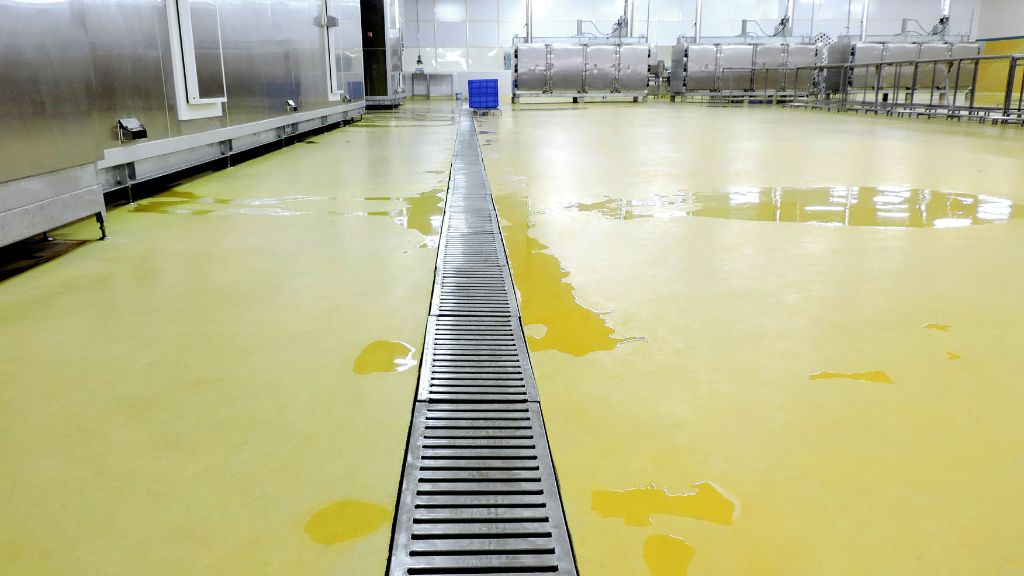
Food manufacturing environments are exposed to a wide variety of corrosive by-products and contaminants including fats, hot oils, blood, sugar solutions and natural food acids - all of which can deteriorate insufficiently robust surfaces in a clean zone, resulting in uncontrolled bacterial growth and putting the site at risk of contamination incidents.
To ensure the sanitary integrity of the production area, it is essential to have a floor finish that facilitates fast and effective cleaning to wash all contaminants out of the area. To achieve this, the floor needs to be seamless and impervious as well as pitched to a fall and have coving and stainless steel drainage incorporated into the finish. All of these flooring properties need to be maintained for an extended period of time despite the inevitable chemical attack, thermal shock, physical impacts and intense wear that a large-scale food manufacturing facility will inflict on the floor.
Hygiene and Cleanability
Floors must support strict sanitation requirements and therefore should have:
Seamless and non-porous surfaces to prevent bacteria growth and contamination.
Smooth but cleanable finishes that do not trap food particles or liquids.
Resistance to microbial growth such as mould or fungi.
Compatibility with frequent washdowns and sanitation procedures.
Hygienic flooring helps maintain safe production environments and simplifies cleaning routines.
Slip Resistance and Safety
Wet conditions are common in food production areas. Flooring should provide:
Slip-resistant textures to reduce the risk of workplace accidents.
Reliable grip even in wet, greasy, or oily environments.
Compliance with workplace safety requirements.
As water exposure is constant in food production areas, effective flooring systems should also be waterproof, resistant to standing water, and include slopes towards drains for effective drainage.
Chemical and Moisture Resistance
Food and beverage facilities use strong cleaning agents and may expose floors to food acids or sugars. Flooring must resist:
Caustic cleaning chemicals and disinfectants
Organic acids from food processing
Fats, oils, sugars, and alcohol-based products
Chemical resistance prevents deterioration, staining, and contamination.
Thermal Shock and Temperature Resistance
Production areas often experience rapid temperature changes. Floors should withstand:
Hot water washdowns and steam cleaning
Cold storage conditions and freezer environments
Rapid temperature cycling without cracking or delamination
Thermal stability ensures long-term durability.
Mechanical Strength and Durability
Food facilities experience heavy operational loads. Flooring systems must withstand:
Forklift and pallet truck traffic
Impact from dropped tools or equipment
Continuous movement of machinery and carts
High mechanical strength prevents premature wear and damage.
Regulatory Compliance
Flooring materials should support compliance with food industry standards. Considerations include:
Materials suitable for food production environments
Low VOC emissions and non-tainting properties
Documentation for hygiene and safety audits


