
Fire Protection
Fire stopping and passive fire protection are essential to limit the spread of fire and smoke, protect high-value assets, and ensure compliance with building and safety regulations.
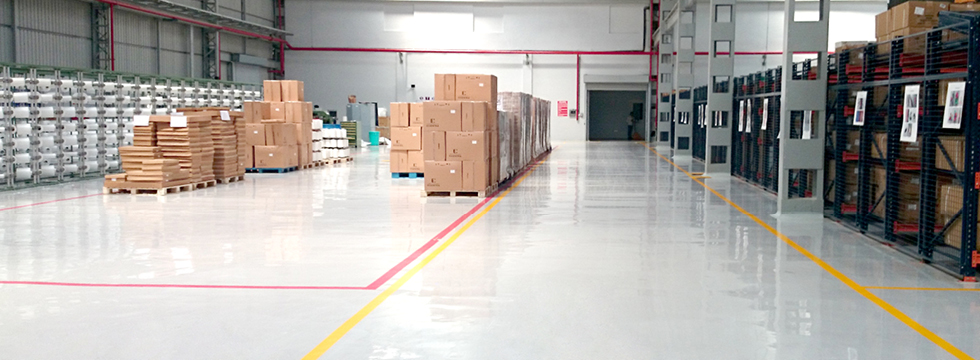
A key requirement is maintaining compartmentation. Logistics hubs and warehouses are typically divided into fire-rated compartments designed to contain a fire for a specified period. To achieve this, all service penetrations, including pipes and cables, must be properly sealed using tested fire stopping systems. Fire-rated walls, floors and ceilings must also be correctly specified and installed to prevent fire and smoke from passing between zones.
Structural fire protection is another critical element. Steel frameworks, which can lose strength rapidly under high temperatures, often require solutions to maintain stability during a fire event, such as fire resistant coatings. This helps preserve the building's integrity long enough for safe evacuation and emergency response.
Attention must also be given to movement joints and linear gaps, particularly in large warehouse structures where expansion and contraction occur. These joints need flexible fire-rated sealing systems that maintain compartmentation without restricting movement.
To ensure regulatory compliance, all fire protection systems must be tested and certified to recognised standards and installed in line with manufacturer guidance. Clear documentation, correct specification and quality installation are vital, as even small gaps or incorrect materials can compromise the entire system.
Finally, ongoing inspection and maintenance are crucial. Logistics hubs are dynamic environments where layouts, services and penetrations can change over time, so fire stopping measures must be regularly checked and updated to remain effective.
By implementing a fully integrated passive fire protection strategy, facility operators can significantly reduce risk, safeguard operations and ensure long-term compliance.


